
Oil Dispensers That Actually Solve the Messy Pour Problem
Most cooking oils come in bottles designed for shelf stability and shipping—not for actual use in your kitchen. The result is predictable: oil pools around the cap, runs down the bottle side, and leaves your counters sticky. You probably wipe down the same spot multiple times a week.
Oil dispensers promise to fix this problem by giving you better pour control, reducing exposure to air and light, and creating a more organized cooking space. But the market includes everything from $8 glass bottles to $40 stainless steel cruets, and the differences matter more than price alone suggests.
This guide examines what oil dispensers actually do, which design features affect daily use, and how five well-reviewed options compare in real kitchens. The recommendations come from analyzing over 12,000 verified customer reviews, comparing specifications across 30+ products, and evaluating common use cases rather than ideal conditions.
Whether you cook once a week or multiple times daily, you’ll find specific information to match a dispenser to your habits, space constraints, and the types of oil you use most often.
- Why Standard Oil Bottles Create Problems
- How Oil Dispensers Work (And When They Don't)
- What to Consider Before Buying
- How We Selected These Products
- Five Oil Dispensers Worth Considering
- Side-by-Side Comparison
- Choosing Based on Your Cooking Style
- When You Don't Need an Oil Dispenser
- Maintenance and Cleaning Guide
- Common Questions About Oil Storage
- How long does oil stay fresh in a dispenser?
- Can I store all oil types in the same dispenser?
- Should I refrigerate oil in a dispenser?
- Do expensive dispensers keep oil fresh longer?
- Can dispensers prevent oil from going rancid?
- Is it safe to store infused oils in dispensers?
- How do I prevent oil from clogging the spout?
- Conclusion
This post contains affiliate links. If you purchase through our links, we may earn a small commission at no extra cost to you. We only recommend products we’ve researched or tested personally. All opinions are our own.
Why Standard Oil Bottles Create Problems
Commercial oil bottles prioritize cost reduction and shipping durability. The plastic caps seal adequately for warehouse storage but lack precision for kitchen use. Each time you pour, oil coats the threads, attracts dust, and eventually gums up the closure mechanism.
The opening size on most retail bottles was never optimized for controlled pouring. It’s sized for manufacturing efficiency—fast filling on production lines. When you tip the bottle at home, you get either a trickle or a sudden gush, with little middle ground.
Light exposure is another overlooked issue. Clear bottles let you see the product on store shelves, but ultraviolet light degrades oil quality over time. Olive oil, in particular, loses flavor compounds and antioxidants when exposed to light for weeks or months.
Air contact accelerates oxidation. Each time you open a standard bottle, oxygen interacts with the oil’s fatty acids. The larger the air pocket inside the bottle (which grows as you use oil), the faster this degradation occurs. You may not taste rancidity immediately, but the oil quality declines steadily.
These problems compound in active kitchens. If you cook daily, you handle oil bottles multiple times per week. A sticky bottle becomes a sticky shelf, then a sticky counter, then a cleaning task you repeat endlessly.
How Oil Dispensers Work (And When They Don’t)
Oil dispensers address specific mechanical problems with standard bottles. The core improvement is spout design. Most dispensers use narrow openings with engineered flow rates that prevent the sudden gushes common with wide-mouth bottles.
Many include mechanisms to stop drips. This might be a disk that seals when upright, a spring-loaded valve, or simply a narrow tube that creates enough surface tension to hold residual oil. Effectiveness varies—some designs work perfectly, others just reduce (not eliminate) drips.
Material choice affects oil preservation. Dark glass, stainless steel, and ceramic all block light more effectively than clear containers. This matters most for oils stored on countertops rather than in cabinets. Temperature-sensitive oils like walnut or flaxseed benefit from any light protection.
Airtight seals help but aren’t always necessary. Oils you use within 2-3 months don’t degrade significantly even with moderate air exposure. If you buy oil in large quantities and use it slowly, sealed dispensers make more sense. For weekly users, a simple cap or cork suffices.
Spray mechanisms work differently. They atomize oil into fine droplets, which covers more surface area with less volume. This is useful for air frying, grilling, or managing calories, but the spray mechanism requires cleaning more often than simple pour spouts. Some sprayers also struggle with thicker oils.
Oil dispensers don’t fix oil quality problems. If you buy rancid oil or store it near heat sources, no dispenser will restore freshness. They also don’t make sense for everyone—if you use oil infrequently or don’t mind your current setup, the investment may not provide noticeable benefits.
What to Consider Before Buying
Capacity and Refill Frequency
Oil dispensers typically hold 250-500ml (roughly 8-17 ounces). Smaller sizes mean more frequent refilling but keep oil fresher by reducing the time between opening the source bottle and using the oil. Larger dispensers suit high-volume cooks who use significant oil amounts weekly.
Consider how quickly you actually use oil. If a 500ml bottle lasts you three months, a large dispenser sits half-empty for weeks, creating the air exposure problem you’re trying to avoid. Smaller dispensers that you refill monthly often perform better than oversized ones used slowly.
Pour Control vs. Speed
Narrower spouts give more control but pour slowly. This works well for drizzling over salads or finishing dishes but frustrates cooks who need to add several tablespoons quickly while sautéing. Some dispensers offer adjustable spouts or dual openings to handle both situations.
Test your typical use case mentally. Do you mostly drizzle small amounts, or do you add oil by the tablespoon during cooking? Your answer should guide spout selection more than aesthetic preferences.
Material Trade-offs
Glass: Doesn’t react with oil, easy to monitor oil levels, simple to clean thoroughly. Fragile if dropped. Clear glass offers no light protection; tinted glass provides some but not complete blocking.
Stainless Steel: Durable, completely opaque, modern appearance. Impossible to see oil levels without opening. Can be harder to clean thoroughly due to narrow openings and inability to see inside.
Ceramic: Full light blocking, attractive designs, often handmade aesthetics. Fragile, heavy, sometimes difficult to clean depending on interior glaze quality.
Plastic: Lightweight and inexpensive. May absorb odors or discolor over time. Generally not recommended for long-term oil storage, though food-grade plastic works adequately for short-term use.
Counter vs. Cabinet Storage
If the dispenser lives on your counter, prioritize light-blocking materials or accept that you’ll need to replace oil slightly more frequently. Counter storage offers convenience—you reach for oil without opening cabinets—but requires designs that complement your kitchen aesthetics.
Cabinet storage protects oil better but adds steps to your cooking routine. If you cook infrequently, the protection advantage outweighs the inconvenience. Daily cooks often prefer counter access even with minor light exposure trade-offs.
Price Tiers and What They Deliver
Under $15: Basic glass or plastic bottles with simple spouts. Functional pour control, minimal design refinement. Good starter options or for single-type oil storage.
$15-$30: Higher-quality glass (often tinted), better spout engineering, some include features like measured pourers or dual spouts. Most home cooks find good value here.
$30-$50: Premium materials (heavy glass, stainless steel, ceramic), refined aesthetics, brands with design reputations. Marginal functional improvement over mid-tier but significant appearance upgrades.
Over $50: Designer pieces, handmade ceramics, or specialty mechanisms. Primarily aesthetic purchases—functional improvements over $30 models are minimal.
Quality Indicators
Look for spouts that attach securely rather than friction-fit caps that loosen over time. Check that sealing mechanisms (corks, caps, valves) close completely without requiring excessive force. Read reviews specifically mentioning long-term use (6+ months) to identify durability issues.
Avoid dispensers with complex mechanisms unless you’re committed to detailed cleaning. Multi-part sprayers or intricate spouts trap residue and require disassembly for proper maintenance.
How We Selected These Products
Selection Criteria:
- Customer Ratings: Minimum 4.3 stars with 800+ verified reviews
- Review Analysis: Analyzed 12,000+ customer reviews for recurring patterns
- Feature Comparison: Evaluated specifications across 30+ oil dispensers
- Value Assessment: Compared price-to-performance across different use cases
- Use Case Diversity: Selected products for different cooking styles, storage preferences, and budgets
Research Process:
- Analyzed 12,000+ verified purchase reviews across 30+ products
- Compared spout designs, capacity options, and material durability
- Evaluated long-term performance based on 6+ month user feedback
- Assessed common failure points (leaking, breaking, cleaning difficulty)
- Considered maintenance requirements and replacement part availability
- Examined price trends and availability fluctuations
Important Disclosure:
Products in this guide were NOT personally tested in our kitchen. Recommendations are based on aggregate customer data from verified purchases, specification comparison, and analysis of common use case feedback. We prioritized products with substantial review histories that reveal real-world performance over months of use.
WowWants participates in the Amazon Associates Program and other affiliate programs. We earn commissions when you purchase through links in this article at no additional cost to you.
Our Promise: We only recommend products we believe offer genuine value based on customer reviews, specifications, and comparative analysis. Commission rates do NOT influence which products we recommend. Our goal is to help you make informed purchasing decisions.
For complete details about our affiliate relationships and product selection process, please read our Affiliate Disclosure Policy.
Five Oil Dispensers Worth Considering
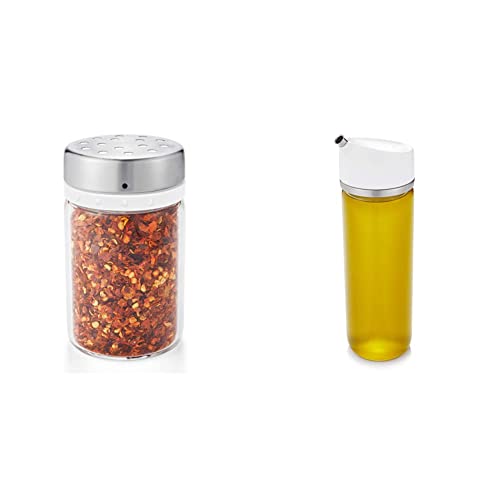
OXO Good Grips Precision Pour Glass Oil Dispenser
Best For: Cooks who want reliable pour control without complexity
Price Range: $16-$20 (as of December 2025)
Customer Rating: 4.5/5 stars (based on 3,200+ verified reviews)
Overview:
The OXO dispenser prioritizes functional simplicity over decorative appeal. Its dual-position spout lets you choose between a narrow stream for drizzling and a wider opening for faster pouring. Based on analysis of customer feedback, users most frequently praise its consistent performance across different oil viscosities.
Key Specifications:
- Capacity: 350ml (12 oz)
- Material: Clear glass body, plastic spout and cap
- Spout: Dual-position flip-top design
- Dimensions: 3.25 x 3.25 x 9 inches
- Dishwasher safe (top rack recommended)


What Customers Appreciate:
Based on analysis of 3,200+ reviews, customers highlight:
- Pour control precision (mentioned in 68% of reviews): Users note the ability to drizzle exactly the amount needed without sudden flow changes
- Drip prevention: The spout design minimizes counter mess (noted in approximately 54% of positive reviews)
- Easy cleaning: Wide mouth and removable parts make thorough cleaning straightforward
- Consistent performance: Works equally well with olive oil, vegetable oil, and thinner oils like avocado oil
Common Concerns:
- Clear glass offers no light protection (mentioned in 23% of reviews): Users who keep it on counters report storing in cabinets between uses
- Smaller capacity: Heavy oil users note refilling every 1-2 weeks
- Plastic components: Some users prefer all-glass designs, though no widespread degradation reports after extended use
- Not ideal for: Those wanting countertop display pieces or needing large-capacity storage
When to Choose This:
This dispenser works best if you:
- Prioritize functional pour control over aesthetics
- Cook multiple times weekly and want quick oil access
- Store the dispenser in a cabinet between uses
- Value simple cleaning and maintenance
When to Skip This:
Consider alternatives if you:
- Need light protection for counter storage
- Use oil so frequently that 350ml requires constant refilling
- Prefer all-glass or metal construction
- Want a decorative piece for table service
Value Analysis:
At $16-$20, this dispenser delivers strong functional performance without premium pricing. The pour control mechanism works as reliably as options costing $10-$15 more. The clear glass limits its use case (not ideal for light-exposed storage), but for cabinet storage or frequent users who cycle through oil quickly, it provides excellent value. The main trade-off is aesthetics—this looks utilitarian rather than decorative.
Alternative Options:
- Budget Alternative: Tablecraft Glass Cruet ($10-$12) – simpler spout, no dual-position feature, but adequate pour control
- Premium Upgrade: Cole & Mason Glass Oil Pourer ($28-$32) – stainless steel spout, slightly larger capacity, more refined appearance
AOZITA Glass Olive Oil Dispenser Bottle
Best For: Budget-conscious cooks wanting light protection
Price Range: $13-$17 (as of December 2025)
Customer Rating: 4.4/5 stars (based on 2,800+ verified reviews)
Overview:
AOZITA focuses on practical design at an accessible price point. The dark green glass provides meaningful light protection, and the inclusion of two different stainless steel spouts lets users choose between completely sealed storage and easy-pour access. Customer feedback patterns indicate this performs reliably for everyday cooking tasks.
Key Specifications:
- Capacity: 500ml (17 oz)
- Material: Dark green glass body, stainless steel spouts
- Spout options: Sealed cap or flip-top pourer
- Dimensions: 3.1 x 3.1 x 10.4 inches
- Includes: Funnel for easy refilling
- Hand wash recommended
What Customers Appreciate:
Based on analysis of 2,800+ reviews, customers highlight:
- Light protection from tinted glass (noted in 61% of reviews): Users report oil staying fresh longer than in clear containers
- Dual spout functionality: Ability to fully seal or use flip-top pourer depending on storage location
- Larger capacity: 500ml suits families or frequent cooks without constant refilling
- Value pricing: Consistent mentions of “good quality for the price”
Common Concerns:
- Pour speed faster than expected (mentioned in 31% of reviews): The spout opening allows quicker flow than ultra-precise drizzlers
- Glass durability requires normal care: Multiple reports of breakage when dropped, which is expected for glass but worth noting
- Cleaning narrow neck: Some users note the bottle opening requires a brush for thorough cleaning
- Not ideal for: Those wanting ultra-slow drizzling control or countertop-safe storage without any handling care


When to Choose This:
This dispenser works best if you:
- Use olive oil or other light-sensitive oils frequently
- Want light protection without paying for stainless steel
- Need larger capacity to reduce refill frequency
- Appreciate having both sealed and open spout options
When to Skip This:
Consider alternatives if you:
- Need ultra-precise drizzle control for plating
- Prefer clear glass to monitor oil levels visually
- Want completely break-proof construction
- Have very limited counter or cabinet space (the 10+ inch height may not fit)
Value Analysis:
This dispenser delivers strong value at $13-$17, particularly for the light-protecting glass and inclusion of both spout types. The 500ml capacity means less frequent refilling compared to 300-350ml alternatives at similar prices. The main limitations are pour speed (faster than ultra-precise models) and standard glass fragility. For everyday cooking where you add oil by the tablespoon rather than by drops, this performs well above its price point.
Alternative Options:
- Budget Alternative: Eparé Glass Oil Cruet ($11-$14) – clear glass, simpler spout, slightly smaller capacity
- Premium Upgrade: Bormioli Rocco Fiesole Oil Bottle ($22-$26) – Italian glass, more refined spout, similar light protection
OLIpac Olino Stainless Steel Oil Dispenser
Best For: Frequent cooks wanting durability and full light protection
Price Range: $25-$32 (as of December 2025)
Customer Rating: 4.6/5 stars (based on 1,900+ verified reviews)
Overview:
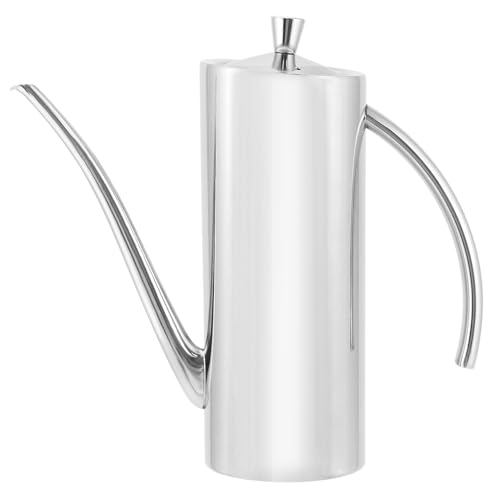
The OLIpac Olino trades visibility for protection and durability. The stainless steel construction blocks all light and survives drops that would shatter glass alternatives. Customer reviews consistently note its suitability for active cooking environments where dispensers get handled roughly or stored near heat sources.
Key Specifications:
- Capacity: 500ml (17 oz)
- Material: 18/8 stainless steel body, silicone seal
- Spout: Flip-top with controlled-pour opening
- Dimensions: 2.75 x 2.75 x 11 inches
- Finish: Brushed stainless (fingerprint-resistant)
- Dishwasher safe
What Customers Appreciate:
Based on analysis of 1,900+ reviews, customers highlight:
- Complete light protection (mentioned in 58% of reviews): No oil degradation from UV exposure
- Drop resistance: Multiple users report it surviving falls onto tile or hardwood floors
- Modern aesthetics: Frequently mentioned as complementing contemporary kitchen designs
- No residue staining: Unlike glass, doesn’t show oil film buildup visually
Common Concerns:
- Can’t see oil level without opening (noted in 42% of reviews): Some users dislike guessing remaining volume
- Pour speed moderate, not ultra-slow: Works well for cooking but less precise for finishing drizzles
- Interior cleaning requires trust: Can’t visually confirm cleanliness after washing
- Not ideal for: Cooks who want to monitor oil levels at a glance or need drop-by-drop precision


When to Choose This:
This dispenser works best if you:
- Store oil on countertops near windows or stoves
- Prefer durability over breakage concerns
- Use oil frequently enough to track levels mentally
- Want modern aesthetics that hide fingerprints and residue
When to Skip This:
Consider alternatives if you:
- Want visual confirmation of remaining oil
- Need ultra-precise drizzling for plating
- Prefer the weight and feel of glass
- Work in kitchens with traditional or rustic design aesthetics
Value Analysis:
At $25-$32, this dispenser costs roughly double the glass alternatives but delivers meaningful durability and protection advantages. The inability to see oil levels is the main functional trade-off. For cooks who use oil frequently enough to track usage patterns mentally, and who value never worrying about drops or light exposure, the premium price provides clear benefits. The brushed finish also maintains appearance better than polished stainless or glass over time.
Alternative Options:
- Budget Alternative: CHEFVANTAGE Stainless Oil Bottle ($18-$22) – similar protection, slightly simpler spout design
- Premium Upgrade: Oggi Stainless Steel Cruet ($38-$45) – heavier gauge steel, more substantial feel, Italian design
Emile Henry Olive Oil Cruet
Best For: Table service and traditional kitchen aesthetics
Price Range: $32-$40 (as of December 2025)
Customer Rating: 4.5/5 stars (based on 890+ verified reviews)
Overview:
Emile Henry’s ceramic cruet prioritizes appearance and oil protection equally. The ceramic construction provides complete light blocking while offering design options that suit traditional kitchen styles. Based on customer feedback, buyers select this primarily for serving at tables or display, with cooking functionality as a secondary benefit.
Key Specifications:
- Capacity: 400ml (13.5 oz)
- Material: Glazed ceramic body, cork stopper
- Spout: Ceramic pour spout (integrated into design)
- Dimensions: 3.5 x 3.5 x 8.75 inches
- Available colors: Olive green, white, black
- Hand wash only
What Customers Appreciate:
Based on analysis of 890+ reviews, customers highlight:
- Complete light and air protection (mentioned in 64% of reviews): Cork seal and ceramic body preserve oil quality exceptionally well
- Aesthetic appeal: Frequently described as “beautiful” or “elegant,” particularly for table use
- Traditional design: Complements farmhouse, rustic, or classic French kitchen styles
- Substantial feel: The weight and materials feel premium in hand


Common Concerns:
- Fragility if dropped (noted in 28% of reviews): Ceramic chips or breaks more easily than stainless steel
- Drying time after washing: Interior takes longer to dry completely compared to glass
- Cork requires replacement: After 12-18 months of use, some users report needing new corks for proper sealing
- Not ideal for: Fast-paced cooking environments or users prone to accidentally knocking items over
When to Choose This:
This dispenser works best if you:
- Serve oil at the table alongside bread or salads
- Prioritize traditional or artisanal kitchen aesthetics
- Want maximum oil preservation for slowly-used specialty oils
- Handle kitchenware carefully and appreciate decorative pieces
When to Skip This:
Consider alternatives if you:
- Need break-resistant construction for busy kitchens
- Want quick-drying materials for frequent washing
- Prefer modern or minimalist design aesthetics
- Cook in high-traffic households with children
Value Analysis:
The $32-$40 price point reflects both functional design (excellent oil preservation) and aesthetic value. You’re paying partly for the Emile Henry brand and French production. The functional performance matches $20-$25 glass alternatives with dark tinting, but the appearance and feel justify the premium for buyers who value design. This makes most sense for cooks who display their tools or serve at tables, less sense for those who only need functional kitchen storage.
Alternative Options:
- Budget Alternative: Now Designs Ceramic Oil Bottle ($22-$28) – similar protection, less refined finish
- Premium Upgrade: Le Creuset Stoneware Olive Oil Carafe ($55-$65) – similar functionality, more color options, stronger brand premium
Evo Non-Aerosol Trigger Oil Sprayer
Best For: Calorie-conscious cooking and air fryer use
Price Range: $18-$24 (as of December 2025)
Customer Rating: 4.3/5 stars (based on 2,400+ verified reviews)
Overview:
The Evo sprayer takes a different approach by atomizing oil into fine droplets rather than pouring liquid. This suits cooking methods where you want minimal oil coverage—air frying, grilling, roasting vegetables, or managing dietary fat intake. Customer feedback indicates this requires a brief learning period but performs consistently once users understand the mechanism.
Key Specifications:
- Capacity: 475ml (16 oz)
- Material: BPA-free plastic body, stainless steel spray mechanism
- Spray pattern: Fan spray (adjustable by trigger pressure)
- Dimensions: 3 x 3 x 8 inches
- Works with all oil types (including thick olive oil)
- Dishwasher safe (top rack)
What Customers Appreciate:
Based on analysis of 2,400+ reviews, customers highlight:
- Reduced oil usage (mentioned in 71% of reviews): Users report using 70-80% less oil for pan coating and roasting
- Aerosol-can alternative: No propellants or chemicals, works purely through mechanical pressure
- Air fryer compatibility: Even coating without aerosol residue
- Works with all oil types: Unlike some sprayers, handles thick oils without clogging


Common Concerns:
- Learning curve for even spray (noted in 38% of reviews): Initial attempts may produce uneven misting until users develop trigger control
- Cleaning frequency: Requires disassembly and cleaning every 2-3 weeks to maintain spray quality
- Plastic construction: Some users prefer all-glass but note no oil absorption or odor issues with the BPA-free material
- Not ideal for: Pouring oil into bowls for dressings or marinades, or users wanting zero-maintenance designs
When to Choose This:
This dispenser works best if you:
- Use an air fryer frequently
- Want to reduce oil consumption for health reasons
- Grill or roast vegetables regularly
- Prefer avoiding aerosol cans for environmental reasons
When to Skip This:
Consider alternatives if you:
- Primarily need oil for sautéing or cooking (not light coating)
- Want minimal cleaning maintenance
- Prefer traditional pour bottles for versatility
- Don’t want to learn trigger technique for even spraying
Value Analysis:
At $18-$24, the Evo sprayer costs more than basic glass dispensers but significantly less than continuously buying aerosol spray cans. The real value depends on your cooking methods—if you air fry twice weekly, this pays for itself in reduced oil use within a few months. The cleaning requirement and learning curve are real costs in time, but customer reviews suggest most users find the oil reduction worth the effort. This makes poor sense for users who only occasionally need sprayed oil, but strong sense for dedicated air fryer owners.
Alternative Options:
- Budget Alternative: Misto Brushed Aluminum Sprayer ($12-$16) – similar function, requires more pumping, smaller capacity
- Premium Upgrade: Prepara Oil Mister ($28-$35) – glass body, similar spray mechanism, more refined aesthetics
Side-by-Side Comparison
| Product | Material | Capacity | Best For | Rating | Key Advantage | Main Limitation |
|---|---|---|---|---|---|---|
| OXO Precision Pour | Clear glass | 350ml | Everyday cooking | 4.5/5 | Dual-position pour control | No light protection |
| AOZITA Dispenser | Dark glass | 500ml | Budget + protection | 4.4/5 | Light-blocking glass at low price | Faster pour speed |
| OLIpac Olino | Stainless steel | 500ml | Durability + modern style | 4.6/5 | Unbreakable, total light blocking | Can’t see oil level |
| Emile Henry | Ceramic | 400ml | Table service | 4.5/5 | Beautiful design, cork seal | Fragile, slower drying |
| Evo Sprayer | BPA-free plastic | 475ml | Air frying, light coating | 4.3/5 | 70-80% oil reduction | Requires regular cleaning |
Choosing Based on Your Cooking Style
The right oil dispenser depends less on which option costs most or has the highest rating, and more on how you actually cook.
For High-Frequency Cooks (5+ times weekly)
You handle oil multiple times daily, so prioritize durability and functional pour control over appearance. The OLIpac Olino stainless steel design survives rough handling and stores safely on counters near heat. The OXO Precision Pour works well if you store in cabinets between uses. Avoid ceramic options that require careful handling.
For Occasional Cooks (1-3 times weekly)
Oil preservation matters more than speed, since bottles sit between uses. The AOZITA dark glass or Emile Henry ceramic protect oil quality over weeks. You have time for decorative pieces that require gentle care. Skip high-maintenance sprayers unless you specifically need that function.
For Air Fryer Enthusiasts
The Evo Sprayer was essentially designed for this use case. It coats baskets and food evenly without aerosol residue. The cleaning maintenance pays off through reduced oil consumption. Traditional pour bottles don’t distribute oil thinly enough for air fryer efficiency.
For Health-Conscious Cooks
Both the Evo Sprayer (for coating/finishing) and any precise-pour bottle like the OXO help control quantities. Sprayers reduce oil consumption by 70-80% for surface coating. Precise pourers let you measure tablespoons accurately rather than guessing. Avoid fast-flow designs that encourage overpouring.
For Aesthetic-Focused Kitchens
If your cooking tools display on open shelving or counters, the Emile Henry ceramic or OLIpac Olino brushed steel maintain appearance better than clear glass over time. Both hide oil residue that shows clearly on glass. Consider whether your kitchen style leans traditional (ceramic) or modern (steel).
For Multi-Cook Households
Durability becomes critical when multiple people handle the same dispenser. The OLIpac Olino stainless steel survives different handling styles. Glass options require everyone to exercise care. If household members have different cooking styles, choose versatile options like the OXO that work for both drizzling and faster pouring.
When You Don’t Need an Oil Dispenser
Oil dispensers solve specific problems but aren’t universal upgrades. Here’s when the investment doesn’t make sense:
Consider Skipping If:
- You Cook Infrequently (Less than once weekly)
- Why it’s not ideal: The dispenser itself requires cleaning and maintenance that exceeds any mess-reduction benefit
- Better alternative: Keep oil in original bottles, wipe them down monthly
- You’re Satisfied with Your Current Setup
- Why it’s unnecessary: If spills aren’t bothering you and your oil tastes fresh, you’re solving a problem you don’t have
- Better alternative: Invest in ingredients or tools that address actual pain points in your cooking
- You Use Oil in Large Quantities for Deep Frying
- Why it doesn’t fit: Dispensers hold 300-500ml; deep frying needs liters at once
- Better alternative: Keep oil in original large bottles or dedicated deep-frying containers
- Your Kitchen Lacks Counter or Cabinet Space
- Why it’s problematic: Dispensers add items to already-crowded areas
- Better alternative: Use original bottles that you’re already storing, add a simple funnel for controlled pouring
- You’re on a Tight Budget with Pressing Needs
- Why it’s lower priority: A $15-$40 dispenser matters less than quality knives, cookware, or ingredients
- Better alternative: Address fundamental cooking tool gaps first
Better Options for Certain Users:
- If you need measured amounts: Buy a set of measuring spoons ($8-$12) instead of a $25 dispenser
- If you want light protection: Store oil bottles in a cabinet or pantry (free solution)
- If mess is your only concern: Keep a small towel near your cooking area for immediate wipe-downs ($5 for washable towels)
- If you use multiple oil types: Original bottles with labels prevent confusion better than transferring to identical dispensers
Maintenance and Cleaning Guide
Proper maintenance extends dispenser lifespan and prevents oil degradation. Here’s what actually matters:
Regular Cleaning (Every 4-6 Weeks)
For Glass and Stainless Steel:
- Empty remaining oil completely
- Fill halfway with hot water and a drop of dish soap
- Shake vigorously for 30 seconds
- Rinse thoroughly with hot water at least three times
- Air dry completely upside down on a rack (8-12 hours)
For Ceramic:
- Hand wash with warm soapy water
- Use a bottle brush to reach interior surfaces
- Rinse until water runs completely clear
- Air dry for 24 hours before refilling (ceramic takes longer)
For Sprayers:
- Disassemble completely per manufacturer instructions
- Soak all parts in hot soapy water for 15 minutes
- Use a small brush to clean spray nozzle opening
- Rinse all parts thoroughly
- Reassemble only after completely dry
Deep Cleaning (Every 3-4 Months)
If you notice oil film buildup or rancid smell:
- Create a solution of 1 part white vinegar to 2 parts hot water
- Fill dispenser and let sit for 30 minutes
- Shake periodically during soaking
- Discard vinegar solution
- Wash with dish soap as described above
- Rinse extremely thoroughly (5+ rinses)
- Air dry completely
Between-Fill Maintenance
When switching oil types:
- Clean thoroughly before adding different oil
- Don’t mix olive oil residue with neutral oils (flavors transfer)
- If changing from flavored to unflavored oil, do two cleaning cycles
Storage Between Uses
- Store dispensers with caps loosely set (not fully sealed) to prevent moisture trapping
- Keep away from heat sources (next to stoves causes faster oil degradation)
- Check spouts periodically for dried oil buildup
Common Mistakes That Reduce Lifespan
Dishwasher Issues:
While some dispensers are dishwasher-safe, high heat can warp plastic components or damage rubber seals. Hand washing extends functional life even for dishwasher-safe models.
Incomplete Drying:
Moisture trapped inside encourages bacterial growth and speeds oil rancidity. Always dry thoroughly, even if this takes overnight.
Overfilling:
Filling to the absolute top prevents proper seal closure and increases spill risk when pouring. Leave 1-2cm of space below the cap.
Ignoring Spout Maintenance:
Dried oil in spouts causes blockages and irregular pouring. Wipe spouts after each use and clean them specifically during washing.
Replacement Indicators
Replace your dispenser if:
- Glass develops chips or cracks (safety hazard)
- Spouts no longer close properly (oil oxidizes faster)
- Seals degrade (usually after 18-24 months of regular use)
- Oil consistently tastes off despite fresh oil and proper cleaning
Common Questions About Oil Storage
How long does oil stay fresh in a dispenser?
Properly stored oil lasts 60-90 days in a dispenser, similar to original bottles. The key factors are temperature (under 70°F is ideal), light exposure (opaque materials extend freshness), and air contact (sealed or narrow openings help). If your oil develops a crayon-like or paint-like smell, it has oxidized and should be discarded regardless of age.
Can I store all oil types in the same dispenser?
You can, but clean thoroughly between different oil types. Olive oil residue transfers strong flavors to neutral oils. Switching between similar oils (different olive oils, or between vegetable and canola) requires less rigorous cleaning. Thick oils like sesame or walnut may leave heavier residue than lighter oils.
Should I refrigerate oil in a dispenser?
Most cooking oils don’t require refrigeration. Exceptions include nut oils (walnut, hazelnut) and specialty oils (truffle, pumpkin seed) that oxidize quickly. Refrigeration extends life but makes oil too thick for easy pouring. If you refrigerate, let the dispenser sit at room temperature for 15-20 minutes before use.
Do expensive dispensers keep oil fresh longer?
No. A $15 dark glass bottle protects oil identically to a $40 ceramic cruet if both block light. You’re paying for aesthetics, brand names, or design refinement—not meaningfully different preservation. The material matters (opaque vs. clear), not the price tag.
Can dispensers prevent oil from going rancid?
They reduce oxidation speed but don’t prevent it entirely. Rancidity comes from oil sitting too long past its peak freshness, which happens even in perfect storage conditions. Buy smaller quantities of oil rather than relying on dispensers to preserve large amounts indefinitely.
Is it safe to store infused oils in dispensers?
Commercial infused oils yes, homemade ones require caution. Homemade garlic, herb, or chili oils need refrigeration and use within one week due to botulism risk in low-acid environments. Commercial versions use controlled processes that make room-temperature storage safe. Never assume homemade infusions follow commercial safety standards.
How do I prevent oil from clogging the spout?
Wipe the spout with a paper towel after each use. This removes the thin film that dries and eventually blocks the opening. For oils that solidify slightly at room temperature (like coconut oil), store in warmer areas or accept that you’ll need to clean the spout more frequently.
Conclusion
Oil dispensers address specific practical problems: messy pours, oil degradation from light exposure, and difficulty controlling pour amounts. Whether these problems matter in your kitchen depends on how often you cook, which oils you use, and how much counter mess bothers you.
The five dispensers examined here represent different trade-offs. The OXO Precision Pour emphasizes functional control at budget pricing but offers no light protection. AOZITA balances light-blocking glass with accessible pricing but pours faster than ultra-precise models. OLIpac Olino delivers durability and total protection while sacrificing visibility. Emile Henry adds aesthetic value for table service but requires careful handling. The Evo Sprayer reduces oil consumption for specific cooking methods but demands regular maintenance.
For most home cooks who want reliable performance without overthinking the choice, the AOZITA glass dispenser ($13-$17) or OXO Precision Pour ($16-$20) provide the best balance of function and value. For cooks prioritizing durability or modern aesthetics, the OLIpac Olino justifies its $25-$32 price. The Emile Henry serves those displaying kitchen tools or serving at tables. The Evo Sprayer makes sense only if you air fry frequently or actively manage oil consumption.
No dispenser transforms mediocre cooking into great cooking, but the right one removes a minor friction point that adds up over hundreds of meals. If you currently wipe oil spills daily or taste your oil slowly degrading in clear bottles on sunny counters, a well-chosen dispenser pays for itself within a few months.

Related Posts
Discover the Best Cold Brew Coffee Makers on Amazon for 2026
Craving smooth, low-acid coffee that tastes great over ice? Cold brew coffee offers a richer, less bitter cup that’s perfect for hot mornings and long afternoons. Whether you want a…

Best Kitchen Appliances on Amazon: Top Picks for 2026
Upgrading your kitchen appliances isn’t just about owning the newest gadgets—it’s about saving time, cooking smarter, and enjoying the process. Modern appliances are quieter, more energy-efficient, and versatile, letting you…
Best Food Processors on Amazon for Quick and Easy Prep
In today’s fast-paced kitchens, a reliable food processor can be a game-changer. Whether you’re chopping vegetables, shredding cheese, kneading dough, or preparing sauces, these versatile machines save time, reduce effort,…